Some Great Examples of Indian Temple Architecture: Types of Temple Architecture
Piyush Kumar April 8, 2026 0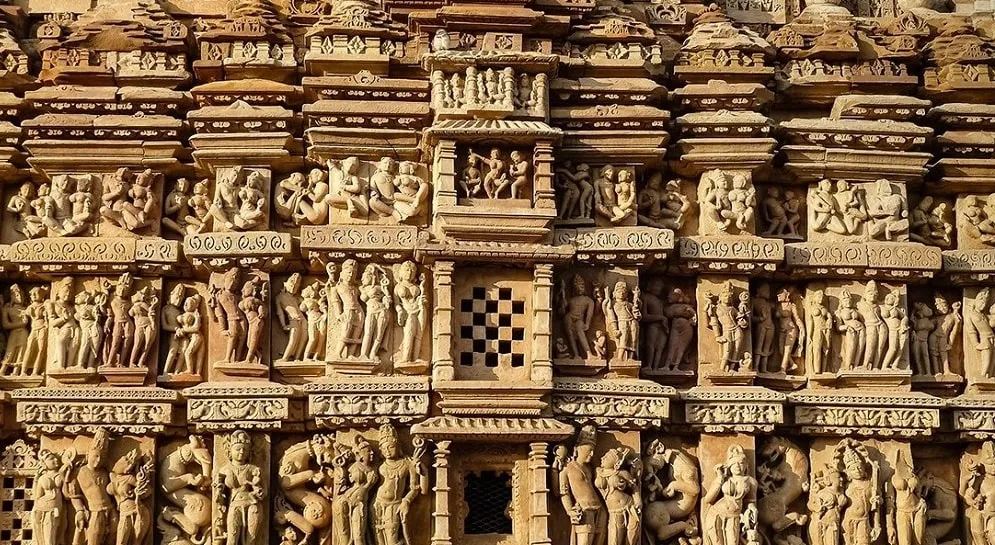
Table of Contents
ToggleSome Great Examples of Indian Temple Architecture
A temple is a structure built for spiritual and religious purposes, including meditation, prayer, and worship. Throughout history, temples have served as the house of worship in many ancient religions, acting as centers for cultural, social, and religious life.
The architecture and design of temples vary significantly across regions, reflecting the diverse climatic, ethnic, historical, and linguistic contexts of India. Ancient India’s art, style, and architecture played a vital role in shaping the patterns of religion and culture, making temples not only spiritual centers but also hubs of artistic expression.
Key Features of Indian Temple Architecture:
- Temples were constructed using locally available materials, such as stone, brick, and wood.
- The architectural styles incorporate sculptures, carvings, murals, and inscriptions depicting deities, mythological stories, and cultural symbols.
- Regional variations in temple design reflect ethnic, racial, and climatic influences, giving rise to distinct architectural schools.
- Temples were often integrated into city planning, serving as social and educational hubs alongside places of worship.
Major Types of Indian Temple Architecture:
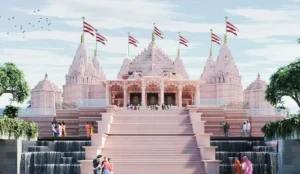
- Nagara Style (North India) – Characterized by a curvilinear tower (shikhara) and often surrounded by subsidiary shrines.
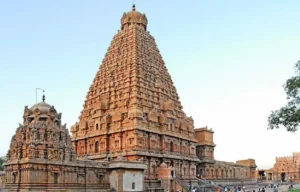
- Dravidian Style (South India) – Known for its pyramidal towers (vimana), large gopurams (gateway towers), and elaborate pillared halls.
- Vesara Style (Deccan region) – A hybrid style combining elements of Nagara and Dravidian architecture.
- Kalinga Style (Odisha) – Famous for ornate spires, intricate carvings, and towering jagamohana (assembly halls).
- Hoysala Style (Karnataka) – Noted for star-shaped platforms, detailed sculptures, and soapstone construction.
Indian temple architecture is thus a reflection of spiritual devotion, cultural richness, and artistic excellence, preserved across centuries through these magnificent structures.
Basic Form of Temple Architecture:-
Here’s a clear, organized explanation of the fundamental elements of a Hindu temple and their significance:
Fundamental Elements of a Hindu Temple
- Garbhagriha (Womb-house)
- The innermost sanctum of the temple.
- Houses the main deity or icon of the temple.
- Originally a small, cave-like cubicle with one entrance; later evolved into a larger, more elaborate chamber.
- Mandapa
- The entrance hall or pillared assembly hall.
- Worshippers gather here for prayers and rituals.
- Often adorned with intricate carvings and sculptures.
- Shikhara / Vimana
- The tower above the sanctum.
- Northern India (Nagara style): Curvilinear tower called Shikhara.
- Southern India (Dravida style): Pyramidal tower called Vimana.
- Symbolizes the mountain abode of the gods.
- Amalaka
- A stone-like circular disc at the top of the Shikhara.
- Predominantly found in North Indian temples.
- Represents the sun or cosmic energy.
- Kalasha
- The topmost finial of the temple tower.
- Often shaped like a water pot.
- Symbolizes prosperity and divine blessing.
- Antarala
- The small hall or vestibule connecting the Garbhagriha and the Mandapa.
- Serves as a transitional space for devotees.
- Jagati
- A raised platform, mostly in North Indian temples.
- Provides space for devotees to sit, circumambulate, and pray.
- Vahana and Dhvaj
- Vahana: The vehicle of the main deity, often placed in front of the temple.
- Dhvaj: The flagstaff, usually aligned axially with the main deity, symbolizing divine presence.
Prominent Temple Styles in India
- Nagara (North India): Curvilinear towers, prominent Shikhara, and often elaborate Jagati.
- Dravida (South India): Pyramidal Vimana, tall Gopurams (gateway towers), spacious Mandapas.
- Vesara (Central/Deccan India): A fusion of Nagara and Dravida styles, combining curvilinear and pyramidal features.
Temples in India are not just places of worship; they are symbolic representations of cosmic order, architecture, and culture. Each element has a spiritual significance that guides the devotee’s journey from the outer world to inner divinity.
Nagara or North Indian Temple Architecture
Here’s a detailed explanation of the Nagara style of temple architecture based on your notes, organized clearly:
Nagara Style of Temple Architecture (North India)
Geographical Context
- Found between the Himalayas and the Vindhyas, in Northern India.
Structural Features
- Two Main Buildings
- Main Shrine (Garbhagriha): Taller building housing the main deity.
- Adjoining Mandapa: Shorter hall attached to the main shrine for devotees to gather.
- Shikhara (Tower)
- Bell-shaped tower, rising in a convex curve.
- The projections on the walls of the temple continue upwards along the Shikhara, emphasizing verticality.
- Symbolizes the divine mountain.
Chambers of the Nagara Temple
- Garbhagriha – Innermost sanctum with the main deity.
- Jagmohan – Pillared hall or assembly hall for worshippers.
- Natya Mandir – Hall for dance and music performances as part of temple rituals.
- Bhoga Mandir – Hall for offerings and prasadam (ritual food) for the deity.
Temple Platform
- Built on stone platforms, elevating the temple above ground level.
Projection Types (Rathas)
Projections on the temple walls are called Rathas. They give rhythm and complexity to the Shikhara.
Projection Type | Description |
Triratha | One projection on each side |
Pancharatha | Two projections on each side |
Saptharatha | Three projections on each side |
Navaratha | Four projections on each side |
- The number of projections increases the complexity and vertical emphasis of the temple tower.
Key Characteristic
- The Nagara temples are vertical in emphasis, with a convex-shaped Shikhara that dominates the skyline.
- The temple’s ornamentation and projections are carried upwards, symbolizing a path from earth to the heavens.
If you want, I can also create a simple labeled diagram of a Nagara temple, showing Garbhagriha, Jagmohan, Natya Mandir, Bhoga Mandir, Shikhara, and projection types so it’s much easier to visualize.
Central India Temple Architectures
Central India Temple Architecture
The ancient temples of Uttar Pradesh, Madhya Pradesh, and Rajasthan share many characteristics, reflecting Nagara style influences with regional variations.
1. Udaigiri Temples (Vidisha, Madhya Pradesh)
- Location: On the outskirts of Vidisha, Madhya Pradesh.
- Style: Part of a complex of cave temples carved into hills.
- Significance: Shows early experimentation with rock-cut architecture, similar to Sanchi.
- Features:
- Simple Garbhagriha (sanctum) carved into rock.
- Mandapas and corridors connected to the main sanctum.
- Sculptural decorations depicting deities and mythological stories.
2. Deogarh Temple (Northern Madhya Pradesh)
- Date: Built in the 6th century CE, during the late Gupta period.
- Style: Early Nagara-style temple on a plinth.
- Significance: One of the earliest structural temples in Central India.
- Features:
- Single Garbhagriha (sanctum) with an east-facing entrance.
- Mandapa attached to the sanctum.
- Elaborate sculptural panels depicting gods, goddesses, and mythological scenes.
- Shows early use of Shikhara (tower) over the sanctum.
3. Lakshmana Temple, Khajuraho (Madhya Pradesh)
- Built by: Chandela King Dhanga, early 954 CE.
- Dedicated to: Lord Vishnu.
- Style: Nagara temple, fully developed and highly ornate.
- Significance: Iconic example of Khajuraho temples, combining religion, art, and architecture.
- Features:
- Elevated on a high plinth.
- Garbhagriha (sanctum) with Shikhara tower above.
- Jagmohan (assembly hall) for devotees.
- Exquisite sculptural decoration on walls, showing gods, goddesses, apsaras, and erotic motifs.
- Emphasis on verticality and projection types, typical of Nagara style.
Key Traits of Central Indian Temples
- Use of Stone Plinths: Temples often raised above ground on platforms.
- Nagara Style Influence: Distinct Shikhara over the sanctum.
- Sculptural Panels: Walls richly decorated with religious and mythological art.
- Integration of Mandapa: Assembly halls for devotees, often elaborately carved.
- Regional Variations: Adaptations to local climate, materials, and artistic traditions.
If you want, I can make a comparative table of Central India’s main temples showing location, date, deity, architectural style, and key features. It will make this much easier to study.
Western Indian Temple Architectures
Here’s a detailed summary of Western Indian Temple Architecture, covering Gujarat, Rajasthan, and Western Madhya Pradesh:
Western India Temple Architecture
The northwestern regions of India—Gujarat, Rajasthan, and western Madhya Pradesh—show a distinct style influenced by local materials, climate, and religious traditions, particularly Hindu and Jain temples.
1. Materials and Construction
- Primary Material: Sandstone is widely used for construction.
- White Marble: Soft white marble is commonly seen in Jain temples, particularly at Mount Abu (Rajasthan).
- Color Variations: Temples range from red-brown sandstone to white marble, often polished and intricately carved.
- Stone Carving: Detailed carving on pillars, ceilings, and walls is a hallmark of Western Indian temples.
2. Prominent Temple Examples
- Sun Temple, Modhera (Gujarat):
- Built during the Chaulukya dynasty in the 11th century CE.
- Dedicated to Surya (Sun God).
- Famous for intricate carvings, stepwell (Kunda), and a large assembly hall (Mandapa).
- Dilwara Jain Temples, Mount Abu (Rajasthan):
- Constructed between 11th and 13th centuries CE.
- Entirely made of white marble.
- Known for exquisite latticework, carved ceilings, and sculpted pillars.
- Demonstrates mastery of stone craftsmanship.
- Ranakpur Jain Temple (Rajasthan):
- Dedicated to Adinath (Jain Tirthankara).
- Over 1,400 intricately carved pillars, each unique.
- Built with white marble, combining symmetry, art, and religious symbolism.
3. Architectural Features
- Shikhara Style: Predominantly Nagara-style towers with curvilinear spires.
- Mandapa (Assembly Halls): Multiple halls for congregational worship and rituals.
- Ornamentation: Walls, ceilings, and pillars are elaborately sculpted with:
- Deities, floral patterns, and mythological scenes
- Jain Tirthankaras and symbolic motifs in Jain temples
- Platforms and Steps: Temples often built on elevated plinths or stepped terraces.
- Use of Light: Openings and jalis (lattices) allow natural light to illuminate carvings.
Western Indian temples show a combination of grandeur, detailed craftsmanship, and regional style, especially with stone carvings and marble artistry, making them unique in comparison to Central and Northern Indian temples.
Eastern Indian Temple Architectures
Here’s a detailed overview of Eastern Indian Temple Architecture, focusing on Bengal, Odisha, Assam, and the Northeast:
Eastern India Temple Architecture
Eastern India has a distinct architectural style, heavily influenced by local materials, regional climate, and devotional practices. Terracotta and laterite stones are primary materials, particularly in Bengal and Odisha.
1. Key Features
- Materials:
- Terracotta: Especially in Bengal temples, for intricate carvings.
- Stone and Laterite: Common in Odisha, used for longevity and durability.
- Shikhara Style:
- Rekha-Deul: Tall, curvilinear towers above the sanctum (typical in Odisha).
- Pidha-Deul: Pyramidal roofs with horizontal tiers (common for assembly halls).
- Ornamentation:
- Extensive sculpted panels depicting deities, mythology, and floral motifs.
- Terracotta work often shows Ramayana, Mahabharata, and daily life scenes.
- Elevated Platforms: Temples are usually built on plinths to protect against flooding.
2. Prominent Examples
Assam
- Kamakhya Temple (Guwahati, Assam):
- Dedicated to Goddess Kamakhya (Shakti Peeth).
- Built in the early 17th century.
- Known for Tantric rituals and distinctive domed structure.
Bengal
- Terracotta Temples of Bishnupur (West Bengal):
- Constructed mainly during the 17th–18th centuries under the Malla kings.
- Famous for pancha-ratna (five-spired) style and intricate terracotta reliefs.
- Depicts mythological stories, daily life, and folk motifs.
- Nava-ratna Temples:
- Characterized by nine spires on a square base, common in Bengal.
Odisha
- Lingaraja Temple, Bhubaneswar:
- Dedicated to Lord Shiva.
- Example of Kalinga architecture, with Rekha-Deul (main tower) and Pidha-Deul (mandapa).
- Sun Temple, Konark:
- Dedicated to Surya (Sun God).
- Famous for its chariot-shaped structure, wheel motifs, and intricate stone carvings.
- Jagannath Temple, Puri:
- Dedicated to Lord Jagannath, Balabhadra, and Subhadra.
- Major pilgrimage site with unique Odishan temple style.
3. Regional Styles
- Rekha-Deul (Odisha): Tall, curvilinear tower over the sanctum.
- Pidha-Deul (Odisha): Tiered pyramid-like roof over mandapas or halls.
- Terracotta Style (Bengal): Flat-roofed or spired structures with brick and terracotta carvings.
- Shikhara-Dome (Assam): Curved domes, often with Tantric symbolism.
Summary
Eastern Indian temples are defined by:
- Regional materials like terracotta, laterite, and sandstone.
- Intricate carvings and sculptural panels showing mythology and culture.
- Distinct tower styles like Rekha-Deul, Pidha-Deul, and terracotta spires.
- Cultural significance, as they are often Shakti Peeths, Sun temples, or major Vaishnavite sites.
Dravida Or South Indian Temple Architecture
Here’s a detailed explanation of Dravida (South Indian) Temple Architecture based on your notes and additional context:
Dravida (South Indian) Temple Architecture
The Dravida style emerged in the southern part of India, mainly in Tamil Nadu, Karnataka, Andhra Pradesh, and Kerala. It is one of the most distinctive and ornate temple architectures in India.
Key Features of Dravida Temples
- Sanctum (Garbhagriha):
- The sanctum may have more than four sides, often square or rectangular.
- Houses the main deity.
- Typically surrounded by an antarala (antechamber) and mandapas (pillared halls).
- Vimana (Tower above Sanctum):
- Pyramidal in shape.
- Composed of multiple tiers (talas) stacked vertically.
- Usually smaller than the Gopuram in grand temples.
- Gopuram (Entrance Gateway):
- Massive, ornate towers at temple entrances.
- Covered with intricate sculptures of deities, mythological scenes, and motifs.
- The Gopuram dominates the skyline of South Indian temples.
- Mandapas (Pillared Halls):
- Spacious halls for gatherings, rituals, and dance performances.
- Often intricately carved with sculptures of gods, animals, and floral designs.
- Prakaram (Enclosures):
- Concentric rectangular or square corridors around the sanctum.
- Devotees perform pradakshina (circumambulation) here.
- Sculptural Work:
- Elaborate carvings on walls, pillars, and ceilings.
- Depict mythological tales, epics, animals, and floral patterns.
Famous Examples of Dravida Architecture
- Kailasanatha Temple (Kanchipuram, Tamil Nadu): Early example with pyramidal vimana and richly carved pillars.
- Brihadeeswara Temple (Thanjavur/Tanjore, Tamil Nadu):
- Built by Raja Raja Chola I (11th century).
- Giant vimana with sculptural excellence.
- Meenakshi Amman Temple (Madurai, Tamil Nadu):
- Famous for tall gopurams, colorful sculptures, and large temple complex.
- Kumbakonam Temples (Tamil Nadu): Numerous Chola-period temples with Dravida style.
Distinctive Characteristics
| Feature | Description |
| Sanctum Shape | Usually square or rectangular, sometimes multi-sided |
| Vimana | Pyramidal tower over the sanctum |
| Gopuram | Tall, ornate entrance tower dominating the temple complex |
| Sculptural Work | Intricate carvings depicting epics and deities |
| Mandapas | Pillared halls for rituals, gatherings, and dance |
| Prakarams | Multiple concentric enclosures for circumambulation |
In short, Dravida architecture emphasizes verticality, grandeur, and intricate sculptural detail, making South Indian temples some of the most majestic religious monuments in India.
Like Nagara temple architecture style has subdivisions, there are subdivisions of Dravida temple architecture.
Subdivisions of Dravida Temple Architecture
- Caturasra (Square Shape)
- The most common Dravida temple form.
- Sanctum (garbhagriha) is perfectly square.
- Example: Brihadeeswara Temple, Thanjavur.
- Square plan gives symmetry and is ideal for stacking multiple tiers of the vimana.
- Shala / Ayatasra (Rectangular Shape)
- Sanctum is rectangular in plan.
- Often used when additional spaces or long mandapas are required.
- Provides a slightly elongated layout for rituals and ceremonies.
- Gaja-prishta (Elephant Back / Elliptical Shape)
- Also called Vrittayata.
- Sanctum has a curved, apsidal shape resembling the back of an elephant.
- Rare but significant for certain early South Indian temples.
- Example: Some early Pallava and Chola temples.
- Vritta (Circular Shape)
- Sanctum is circular in plan.
- Used for special symbolic or ritualistic significance.
- Often topped with circular vimana tiers.
- Example: Certain smaller shrines and sub-shrines in temple complexes.
- Ashtasra (Octagonal Shape)
- Sanctum is octagonal in plan.
- A relatively rare style in Dravida architecture.
- Adds visual uniqueness and allows more sculptural faces on the vimana.
- Example: Some small shrines within larger temple complexes.
Key Points
- The plan shape of the sanctum determines the shape of the vimana above it.
- Square and rectangular forms (Caturasra, Shala) are most commonly used in large, prominent temples.
- Circular, elliptical, and octagonal forms are rare and used symbolically.
- These variations demonstrate the flexibility and creativity of Dravida temple architects in South India.
Vesara Temple Architecture
Exactly! The Vesara temple architecture represents the fusion of Nagara (North Indian) and Dravida (South Indian) styles, combining the best features of both traditions. Here’s a structured summary:
Vesara Temple Architecture
Key Features
- Fusion Style
- Combines Nagara’s curvilinear Shikhara with Dravida’s pyramidal Vimana.
- Allows creativity in tower design while maintaining traditional sanctum layouts.
- Regional Adaptation
- Prominent in Central India (Madhya Pradesh, Chhattisgarh) and Deccan region (Karnataka, Telangana).
- Adapted to local materials, climate, and cultural preferences.
- Historical Examples
- Chalukyas of Kalyani (Western Chalukyas) – famous for temples with elaborate carvings and fusion of styles.
- Hoysalas (Karnataka) – temples like Chennakesava Temple, Belur and Hoysaleswara Temple, Halebidu are iconic Vesara examples.
- These temples show intricate sculpture work, ornate mandapas, and tiered vimanas blending North and South features.
- Cultural Significance
- Represents the integration of architectural ideas across India.
- Demonstrates how art, religion, and culture are interwoven in temple design.
- The ornamentation, carvings, and layout often narrate mythological and heroic events, preserving heritage.
- Modern Importance
- Vesara temples are tourist attractions and heritage sites.
- They reflect the historical craftsmanship of Indian artisans and the spiritual ethos of Hinduism.
Summary
The Vesara style illustrates that Indian temple architecture is not just structural, but a living record of culture, devotion, and history. It combines the geometric precision of the North with the vertical elegance of the South, creating temples that are both functional and visually stunning.
Conclusion
Temples are not only remarkable architectural landmarks, but they also serve as living symbols of India’s rich cultural and spiritual heritage. Their diverse styles—from Nagara and Dravida to Vesara—showcase the creativity, devotion, and craftsmanship of Indian artisans over centuries.
These temples attract tourists and devotees from across the world, promoting cultural exchange and fostering appreciation for India’s traditions. Beyond their spiritual and cultural significance, temples also contribute to the Indian economy by boosting tourism, creating employment opportunities, and supporting local trade.
In essence, temples are more than places of worship; they are treasures of art, culture, history, and economic vitality, reflecting the enduring legacy of India’s civilization.