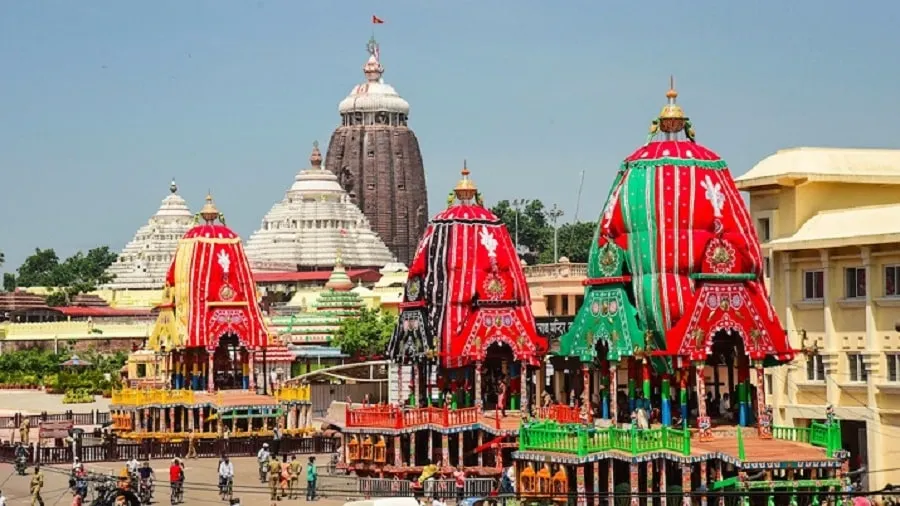
The Jagannath Puri Temple is a highly significant and renowned site for followers of Hinduism. It was primarily built to provide religious guidance and spiritual support to devotees.
Located in Odisha, India, this temple is one of the most visited and celebrated temples in the country. It has been an integral part of Indian culture for centuries, holding a special place in Hindu traditions.
Key Features:
The temple sees a large influx of devotees during the Navratri festival.
It is also known as Jagarvatpuri or Jugalwara, meaning the abode of Lord Shiva.
Various religious rituals and festivals are performed here, attracting both pilgrims and tourists.
Apart from its spiritual importance, the temple is also famous worldwide for its architectural beauty and cultural heritage.
Who built the Jaggarnath Puri Temple ?
The Jagannath Puri Temple was built by Ananta Varman Choda Ganga Deva of the Ganga Dynasty and is an important place of worship for both Hindus and Jains. The temple is renowned for its unique architecture, reflecting the craftsmanship of Puri’s ancestors who constructed it centuries ago.
It is considered one of the oldest and largest Hindu temples in the world. The temple is also referred to as the “Temple of the Gods” or the “Temple of Shiva.” Its construction spanned over 600 years and it was primarily dedicated to Lord Shiva.
The temple complex includes a main shrine along with several subsidiary shrines dedicated to deities such as Shiva, Vishnu, and Brahma. These deities have been worshipped here since ancient times, with the main deity being Shiva, often associated with Kalki or Mahamaya (Shiva’s consort).
The temple stands as a monument of spiritual and architectural significance, attracting thousands of devotees and tourists from around the world.
Jagannath Puri Temple Facts
According to Indian mythology, the Jagannath Puri Temple is believed to be the place where Lord Shiva, the god of destruction and transformation, was born. The site was historically used for performing rituals, and after a fire destroyed the earlier structure, it is said that Shiva manifested here.
The temple was originally constructed using bricks made from lime and sandstone sourced from nearby mountains, making it more durable than many other temples of that era. In 1836 AD, the temple was damaged by fire but was later restored by Maharaja Ranjit Singh Chaudhary (1812–1865), who also built another temple in present-day Patna, Bihar.
The current temple complex consists of two main sections. It is dedicated to Lord Shiva, worshipped here as Bhagawan Jagannath. The complex also features a large pond containing an image of Lord Jagannath and a statue of Goddess Parvati. While there are other smaller temples in the surrounding area, none hold the same historical or religious significance as the Jagannath Puri Temple.
This temple continues to be an important spiritual center, attracting devotees and visitors from across India and the world.